Finding a Rehearsal Room and an Affordable Hall
How amateur ensembles find rehearsal rooms and affordable halls, from library meeting rooms and community centres to school halls and shared church spaces.
By the District Songbook editorial teamPublished Revised Reading 6 minutes
An amateur ensemble needs a room the same way it needs a pianist: without one, the season cannot start. In Washington, that search usually begins months before the first rehearsal, and it ends in one of a small number of places. Community halls, school dining rooms and assembly halls after hours, church basements, arts centres and dedicated rehearsal studios all take adult groups, and each of them asks a different set of questions in return. This article walks through the room types an ensemble is likely to encounter, the questions worth asking before signing anything, and the practical side of sharing a space with another group.
The word for most of these rooms is unglamorous. A community centre, community center or community hall is simply a public location where members of a community gather for group activities, social support, public information and other purposes. That is the same classification that covers the dance class downstairs and the voting station in November, and it explains why a choir often finds itself in a building that was never designed around sound.
What kind of room does a choir actually need?
Start with the acoustic question, not the aesthetic one. A room with a hard floor, a high ceiling and bare walls will flatter a large group and punish a small one. A room with carpet, curtains, low ceilings and soft furnishings will swallow the upper partials that hold a vocal jazz chord together, and singers will push to hear themselves. Neither is wrong. What matters is knowing which one the ensemble has, because the rehearsal plan changes with it.
The second question is size. A mixed choir of thirty needs standing room in the middle and space to circulate at the edges. A quintet can work in a living room if the piano fits and the neighbours are patient. Between those extremes there is a wide band of rooms that work for one ensemble and not another, which is why a group about to move should rehearse in the candidate room once before committing.
Where the rooms come from
The building types that host adult singing in the District are varied, and their origins matter less than their current condition. Some rooms were purpose built for community use. Others are disused public buildings: when an official government building such as a school or city hall is no longer needed for its original purpose, it is sometimes offered to the community as a gift, a loan or a sale. A third category covers buildings that once served a different primary purpose, such as a school, a church, an inn or a town hall, and were later acquired so those functions could continue after the original use subsided.
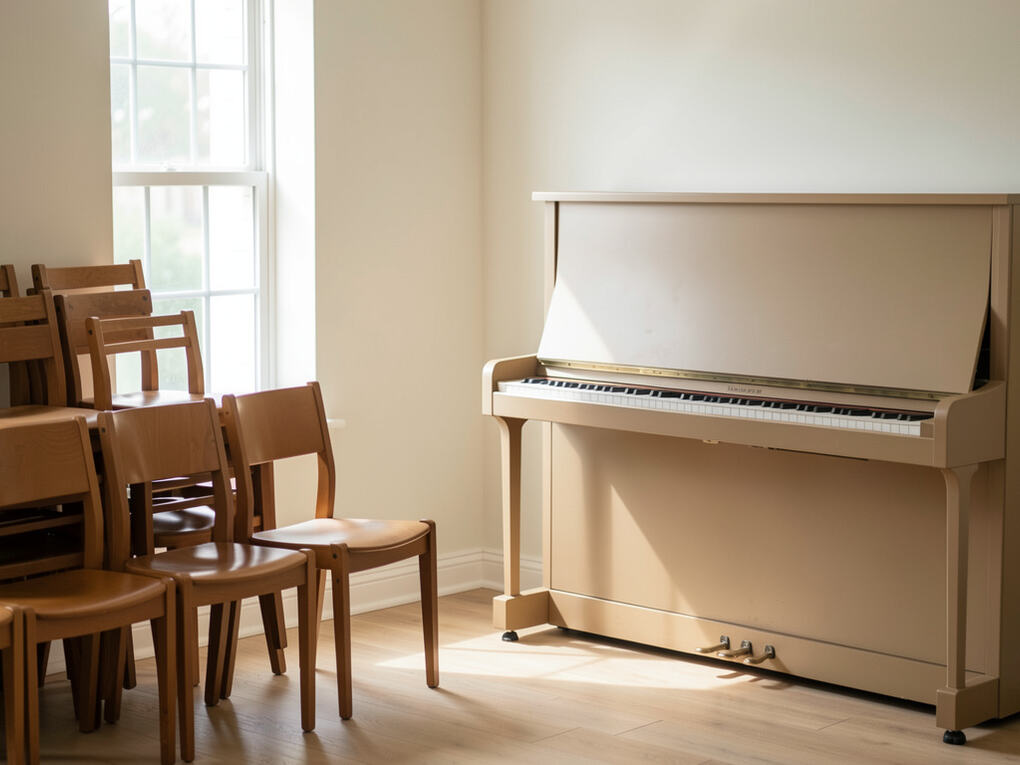
That last category is where a lot of Washington choirs end up. The building has a history, the room has a stage or a raised end, and the rent reflects the fact that the space is already paid for. The trade off is that the ensemble is a guest in someone else's calendar.
What do you ask before you book?
Ask about access first. Which door is open at the rehearsal hour, who holds the key, and what happens if the keyholder is late. Ask about setup time: whether the ensemble may arrive thirty minutes early to move chairs, and whether the room must be cleared immediately after, because a group that cannot set up in under ten minutes will lose the first twenty minutes of every rehearsal.
Ask about heating and ventilation. A cold room on a January evening is not a neutral problem for a singer, and a sealed room with no air movement is worse by the second hour. Ask whether the room is used immediately before the ensemble, and if so by whom, because a yoga class leaves mats and a children's party leaves crumbs. Ask what is stored on site: a piano that stays in tune, a music stand cupboard, or nothing at all.
Then ask about sound. Whether the neighbours share a wall, whether there is a curfew, and whether the ensemble is allowed to sing at full dynamic in the final half hour. Rooms used for public meetings, cultural events, exhibitions and bazaars, recreational classes and physical activities are all in the same building stock, so the answer varies street by street.
What about affordable concert halls?
A rehearsal room and a performance room are two different budgets. A hall with a proper acoustic, seating and a box office typically costs several times the hourly rate of a rehearsal studio, and many ensembles only hire one for the concert itself, rehearsing elsewhere for the whole season. That produces the familiar pattern of a choir that knows its rehearsal room intimately and meets its concert hall for the first time on the day.
A rehearsal room and a performance room are two different budgets.
District Songbook, Singing in Washington DC
There is a fix, and it costs nothing but planning. Book one rehearsal in the performance space, even a short one, so the group hears the room before the audience does. It is worth reading up on where District choirs perform before the visit, and the section on singing in Washington covers the rest of what a local ensemble needs to know about the city. Singers who have never heard themselves in the hall will over-sing in the first half and tire before the interval. The same principle applies to the concert venue's backstage arrangements, the position of the piano and the route on and off stage, none of which can be rehearsed in a basement.
For a fuller picture of how these buildings are classified and run around the world, the Wikipedia page on community centres sets out the ownership models and the historical examples, including the early American centres that grew out of school buildings used outside school hours.
What does shared use cost in practice?
Sharing a building has three costs that never appear on the invoice. The first is time: setting up and striking the room, every week, by whoever arrives first. The second is storage: somewhere for folders, stands, a keyboard and the small amplifier that the group cannot carry home. The third is goodwill, which is the hardest to budget. A group that leaves the chairs as it found them will be offered the room again next season. A group that leaves them stacked in the corridor will not.
Written terms help. A short agreement that names the hours, the access route, the storage area and the notice period protects both sides, and it is easier to sign than to argue about later. It also settles the question of who is responsible if something breaks.
A hall is not a home
Every room an ensemble uses belongs to someone else, whether that is a local authority, a congregation, a school, a commercial landlord or a residents' group. The ensemble's job is to be a good tenant for two hours a week and to leave the room ready for whatever happens next. That constraint is not a limitation on the singing. It is the reason the singing happens at all.