Concert Spaces Used by District Choirs
Surveys performance spaces used by District vocal ensembles, from churches and halls to outdoor stages, with notes on acoustics, seating and access.
By the District Songbook editorial teamPublished Revised Reading 6 minutes
If you sing in an adult ensemble in Washington, the room is part of the instrument. A high stone space, a live lobby, a dry hall and a house of prayer each return your sound in a different way, and each asks for a different way to sit, to listen, and to move. This guide uses one District stop to show how to read any choir venue before concert night, from tour formats and group rules to seating, access and quiet time.
What does a choir concert ask from a room?
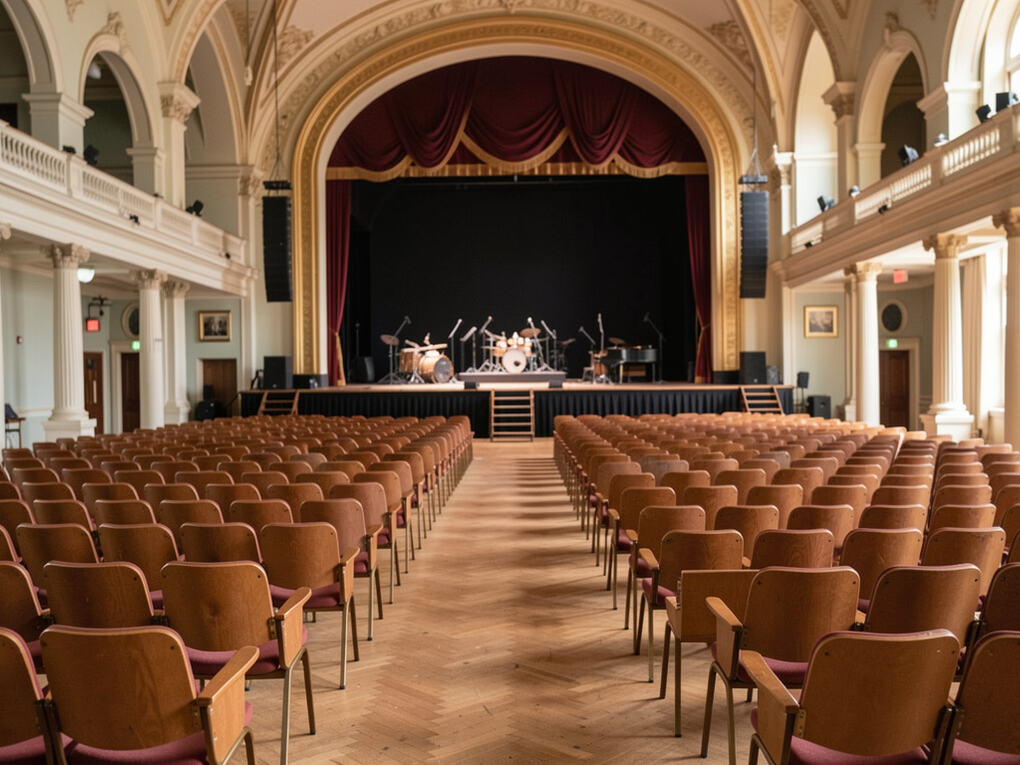
You can learn a lot before anyone sings. When you walk in, notice how far your speaking voice carries, how long a clap lingers and where you can still hear consonants clearly. In vocal jazz and choral singing, words have to land, so seats near reflective surfaces help with blend while seats under deep overhangs or behind columns can soften detail. If you are scouting for your ensemble, bring a friend, sit apart and compare what each of you hears. A place to sing in Washington makes more sense when you test it as a listener first and as a singer second.
How do sightseeing hours shape your plan?
At Washington National Cathedral, sightseeing hours vary to accommodate the wide range of activities and ministries offered. The Visit and Tour page does not publish fixed sightseeing hours. That variation matters for singers because a daytime visit and an evening concert are two different acoustic and logistical situations. Use a daytime stop to learn entrances, stairs, restrooms, and quiet corners, then plan concert arrival with extra time for doors, seating, and settling. When hours shift, your plan has to shift too.
Self-guided time or guided focus
The Cathedral lists three ways to look around. Self-Guided Sightseeing lets you move at your own pace, Guided Spotlights Tour follows a guide for short highlights, and Themed Guided Tours follow a set theme. The page shows prices vary for each format. For a singer, each format teaches something different. Self-guided time helps you find where you would stand, where the group would gather and where sound feels clearest. A short guided format helps you hear how a trained speaker projects in that volume. A themed format helps you connect words, history and space, which is useful when your program has texts to introduce.
Why does group size change the visit?
Going alone and going with twenty singers are not the same visit. The Cathedral asks visitors with a group of 20 or more to reserve the tour in advance. That rule explains the reason behind many venue policies. A large group needs a meeting point, a start time and a path that does not block aisles or worship. If you are planning with how adult vocal ensembles rehearse and perform in mind, count every person, including guests and helpers, and book the group slot before you promise seats to friends. Advance booking also gives staff time to advise on entry and seating flow.
Going alone and going with twenty singers are not the same visit.
District Songbook, Singing in Washington DC
Where do you enter, park and sit?
Access notes decide whether concert night feels calm. The Cathedral keeps location, parking, entrance information, and answers to frequent questions in one place, so you can plan a Cathedral visit around doors and transport rather than guess on arrival. Think like a singer with gear. Where do cases and folders go during the set? Which entrance keeps a late arrival from crossing the performing area? Which seats give a clear line of sight to the director and the rhythm section without crowding an aisle? A short check of that practical page saves steps and spares your voice.
What can you hear before you sing a note?
You do not need a sound check to study a room. Sit in three places and listen to the building itself. Notice footsteps, ventilation and street sound, then notice how a whispered count from the front carries to the back. In a large stone building, sustained chords bloom and fast scat passages can blur, so diction and spacing matter more than volume. If you audition or perform with others around town, the same habit transfers. Your survey of how community choir auditions work in Washington already trains the ear to judge distance and clarity, and a venue visit is the same skill applied to chairs and walls.
| Kind of space | Typical ensemble | Usual evening | What the public page leaves out |
|---|---|---|---|
| Church sanctuary | Community chorus | Saturday evening | Acoustic varies with the audience size |
| School auditorium | Neighborhood choir | Weekday after hours | Rehearsal room is often elsewhere |
| Recital hall | Chamber vocal group | Sunday afternoon | Seats sell or stay empty by word of mouth |
| Outdoor stage | Festival chorus | Early summer evening | Sound check decides more than the stage |
How do you pace an evening around the music?
A good concert night has margins. Open City sits next to the Cathedral on South Road and offers a place to linger over a latte or a quiet bite, with hours and menus linked from the visit page. The gift shop sits on the main level and stays open during normal sightseeing hours, with souvenirs and publications inspired by the treasures inside. For singers, the lesson is pacing. Arrive early enough to settle the breath, keep talking low before the downbeat and leave room after the last chord before the crowd moves. Vocal care continues offstage, and short, restful habits through the day support steadier singing at night.
What stays closed or changes this season?
Venues change by season, and programs change with them. The visit page notes that the Garth and Memorial Garden are temporarily closed, and it lists Lost Worlds by Luxmuralis as coming in January 2027. Neither fact tells you how a choir will sound on a given night, and that is the point. Check what is open, what is ticketed and what shares the building on your date. A light installation, a tour group or a closed courtyard can move foot traffic and shift where you wait, gather and warm up. Read the current notes, then shape arrival, meeting points and quiet time around them.
Can worship time help you listen differently?
The Cathedral describes itself as a house of prayer for all people, and there is never a charge for worship services or private prayer. That distinction helps singers understand the building. Sightseeing follows one rhythm, worship follows another. If you attend worship or sit for private prayer, you hear the room at its most attentive, with pauses, soft singing and spoken words. Notice how little force it takes to be heard when the room is quiet. Carry that memory into rehearsal and ask for balance before volume, for clear vowels before push and for silence between pieces as part of the music. Check the worship schedule and choose a nearby cafe time that leaves your voice rested for the next performance.